Allulose Sweetener: The Rare Sugar With Minimal Calories
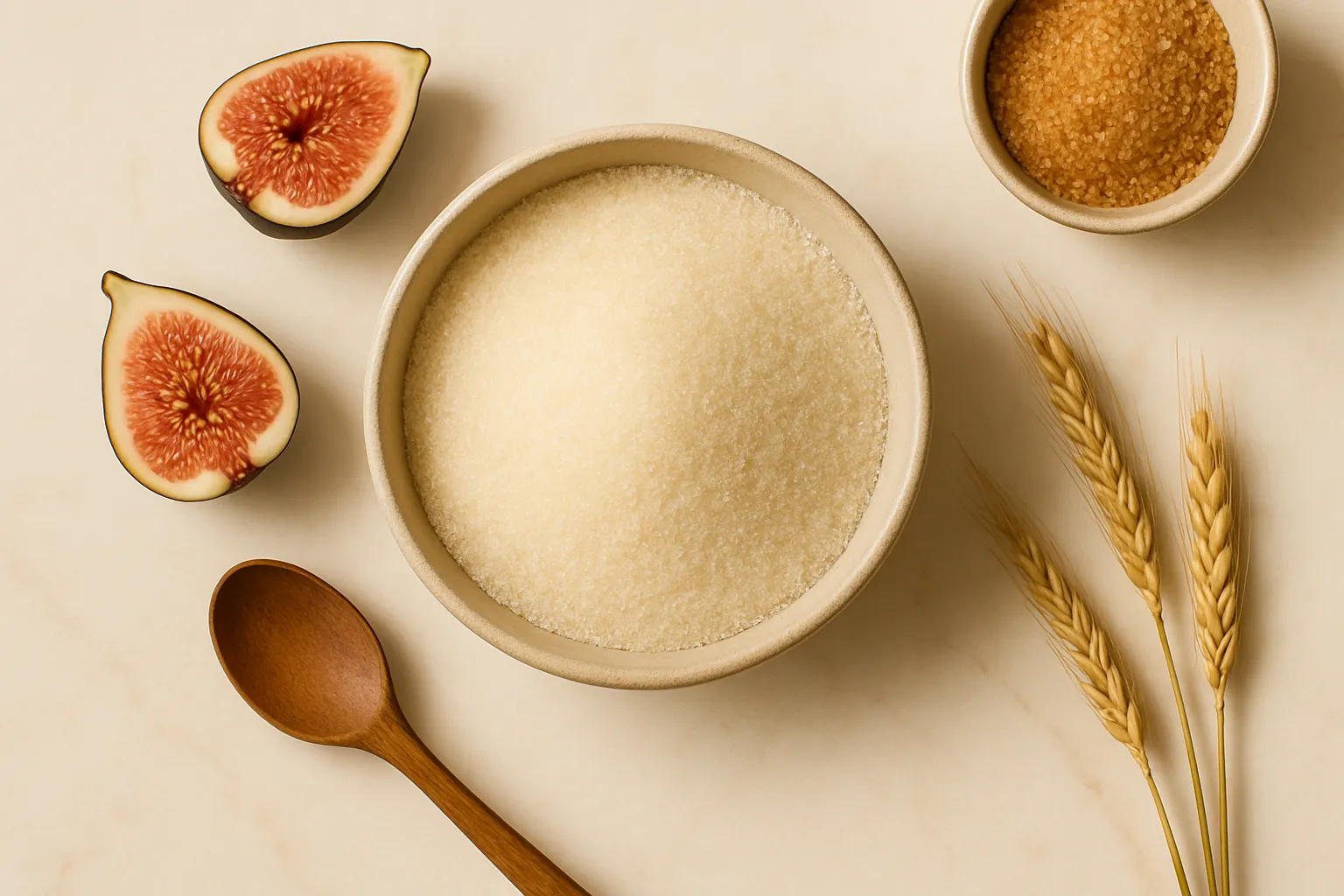
Allulose sweetener is a rare sugar naturally found in small amounts in figs and wheat. It tastes 70% as sweet as table sugar but contains only 0.4 calories per gram with minimal impact on blood glucose. Noble Cane is developing allulose products for home bakers seeking low-calorie alternatives.
What is allulose sweetener?
Allulose is a rare sugar (also called D-psicose) that occurs naturally in wheat, figs, and raisins but in quantities too small for commercial extraction.
Allulose is a rare sugar (also called D-psicose) that occurs naturally in wheat, figs, and raisins but in quantities too small for commercial extraction. Commercially produced allulose is made by converting fructose from corn through an enzymatic process.
It looks and tastes like table sugar with about 70% of the sweetness. Unlike artificial sweeteners, allulose is chemically a sugar, it just behaves differently in your body.
The key difference is absorption. Your small intestine absorbs allulose but doesn't metabolize it for energy, so most of it passes through and is excreted in urine. This gives it roughly 0.4 calories per gram compared to sugar's 4 calories per gram.
How does allulose affect blood sugar?
Clinical studies show allulose does not raise blood glucose or insulin levels in the way sucrose does, making it suitable for people monitoring glycemic response.
Clinical studies show allulose does not raise blood glucose or insulin levels in the way sucrose does, making it suitable for people monitoring glycemic response. Research published in Nutrition Research and Practice found that allulose consumption resulted in significantly lower postprandial glucose compared to sucrose.
Some studies suggest allulose may even improve glucose tolerance when consumed with carbohydrate-containing meals. A 2018 study in Nutrients found that allulose consumed with white rice reduced the glycemic response compared to rice alone.
This doesn't mean allulose is a health food or diabetes treatment. It means it behaves more like fiber than sugar when it comes to blood glucose impact, which matters if you're counting net carbs or managing insulin response.
Does allulose sweetener taste like sugar?
Allulose tastes clean and sweet without the metallic aftertaste common in stevia or the cooling sensation of erythritol. Most people describe it as the closest alternative to table sugar in flavor profile.
The sweetness is about 70% as intense as sucrose, so you need to use more of it by volume to achieve the same sweetness level. Many recipes call for 1.3 to 1.5 times the amount of allulose compared to the sugar amount listed.
It dissolves easily in both hot and cold liquids, browns during baking (though not as deeply as sugar), and doesn't crystallize. This makes it more versatile in recipes than many other low-calorie sweeteners.
What are the downsides of allulose?
The most common side effect of allulose consumption is digestive discomfort, including bloating, gas, and diarrhea, particularly at doses above 0.4 grams per kilogram of body weight.
The most common side effect of allulose consumption is digestive discomfort, including bloating, gas, and diarrhea, particularly at doses above 0.4 grams per kilogram of body weight. Because your body doesn't fully absorb it, excess allulose draws water into your intestines similar to sugar alcohols.
For a 150-pound person, that threshold is roughly 27 grams of allulose in one sitting. Some people tolerate more, some less. Start with small amounts and increase gradually to assess your own tolerance.
Cost is another consideration. Allulose is significantly more expensive than table sugar, typically running $12 to $20 per pound compared to less than $1 per pound for conventional sugar. It's also less widely available in stores, though online options are growing.
Can you bake with allulose sweetener?
You can bake with allulose, and it performs better than most alternative sweeteners. It provides browning, moisture retention, and texture similar to sugar, though not identical.
Baked goods made with allulose tend to spread more (think flatter cookies) and brown faster, so you may need to reduce oven temperature by 25 degrees F and watch timing carefully. It also doesn't provide the same structure as sugar in recipes that depend on creaming or beating sugar with butter.
Allulose works best in recipes where sugar's role is primarily sweetness and moisture, like quick breads, muffins, and sauces. It's less reliable in meringues, caramels, or recipes requiring sugar's crystalline structure.
Is allulose FDA approved?
The FDA granted allulose Generally Recognized as Safe (GRAS) status and in 2019 excluded it from total and added sugar labeling requirements due to its minimal caloric contribution.
The FDA granted allulose Generally Recognized as Safe (GRAS) status and in 2019 excluded it from total and added sugar labeling requirements due to its minimal caloric contribution. This means products containing allulose can list lower added sugar counts on nutrition labels.
However, manufacturers must still include allulose in the ingredient list and account for its weight in total carbohydrates. The FDA requires the calorie contribution to be calculated at 0.4 calories per gram rather than the standard 4 calories for sugars.
In other countries, regulations vary. Japan has used allulose in foods since the early 2000s, while the European Union has not yet approved it for widespread use as of 2026.
Where can you buy allulose sweetener?
Allulose is available online through major retailers like Amazon, Thrive Market, and specialty health food sites. Brands like RxSugar, Wholesome, and NOW Foods offer granulated allulose in bags ranging from 12 ounces to 3 pounds.
Some well-stocked grocery stores carry allulose in the baking aisle or health food section, though availability varies by region. Whole Foods, Sprouts, and regional chains with extensive natural food sections are your best brick-and-mortar options.
Noble Cane is developing allulose products designed for home bakers who want the benefits of rare sugar sweeteners with the quality standards you expect from a premium pantry brand. Join the waitlist at noblecanesugar.com/shop to be notified when these products launch.
Quick answers
Is allulose better for you than regular sugar?
Allulose contains significantly fewer calories (0.4 vs 4 per gram) and doesn't raise blood glucose like regular sugar. However, it can cause digestive discomfort in larger amounts and costs substantially more. Whether it's better depends on your specific dietary goals and tolerance.
Can diabetics use allulose sweetener?
Allulose does not significantly raise blood glucose or insulin levels, making it a potential option for people with diabetes. However, anyone managing diabetes should consult with their healthcare provider before making dietary changes and monitor their individual response.
Does allulose have an aftertaste?
Allulose has a clean, sweet taste without the bitter or metallic aftertaste associated with stevia or the cooling effect of erythritol. Most people find it the closest in flavor to table sugar among low-calorie sweeteners.
How much allulose equals 1 cup of sugar?
Because allulose is 70% as sweet as sugar, you need approximately 1.3 to 1.5 cups of allulose to match the sweetness of 1 cup of sugar. Many bakers start with a 1:1.3 ratio and adjust to taste.
Why is allulose so expensive?
Allulose requires specialized enzymatic processing to convert fructose from corn into the rare sugar form. The production process is more complex and costly than refining regular sugar, and the market is still relatively small, keeping prices high at $12 to $20 per pound.